
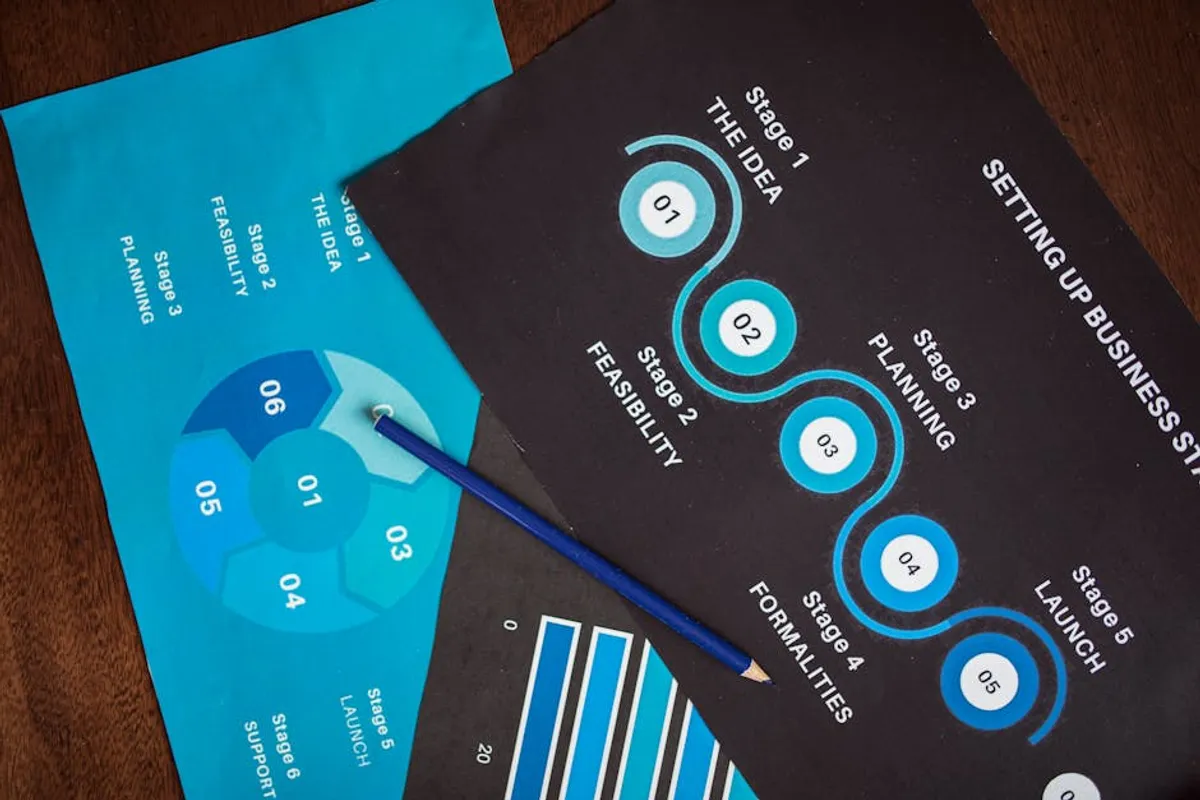
Before any significant business initiative, particularly the development of a strategic roadmap, clarity is paramount. A business roadmap is not merely a timeline of features or projects; it's a strategic communication tool that aligns stakeholders, defines priorities, and articulates how a business will achieve its objectives. Its effectiveness hinges not on the elegance of its design, but on the rigor of the questions asked and answered during its conception. Rushing into a roadmap without a foundational interrogation of purpose, resources, and impact frequently leads to misaligned efforts, wasted resources, and ultimately, failure to meet strategic goals. The following questions are designed to provide a structured framework for critical thinking, ensuring your roadmap is built on a solid, commercially viable foundation.
Framing Your Roadmap: Why Strategic Questions Matter
The act of creating a business roadmap is inherently strategic. It requires foresight, resource allocation, and a clear understanding of market dynamics and internal capabilities. Without a disciplined approach to questioning, roadmaps can become wish lists, technical backlogs, or simply a collection of tactical tasks lacking overarching direction. The value of a roadmap lies in its ability to translate high-level vision into actionable steps, demonstrating how each initiative contributes to measurable business outcomes. The questions posed below serve as a diagnostic tool, revealing potential gaps in understanding, challenging assumptions, and forcing a holistic view of the initiative before significant capital and effort are committed.
1. What Specific Problem Are We Trying to Solve, or Opportunity Are We Pursuing?
This foundational question anchors the entire roadmap. It demands a precise articulation of the core challenge or market opening that the roadmap intends to address. Vague problem statements lead to unfocused solutions and diluted impact. A clear problem definition ensures that every subsequent initiative and feature directly contributes to resolving that specific issue or capitalizing on the identified opportunity, preventing scope creep and resource misallocation.
Best For: Initial project ideation, strategic planning sessions, new product development, market entry strategies.
Pros: Establishes a clear, measurable objective; facilitates stakeholder alignment around a common goal; acts as a filter for irrelevant initiatives; provides a baseline for success metrics.
Cons: Can be difficult to achieve consensus if stakeholders have differing priorities; risks oversimplifying complex issues if not thoroughly explored; may lead to analysis paralysis if not time-boxed.
Verdict: Without a precise answer, the roadmap lacks a true north. This question is non-negotiable for establishing commercial relevance and strategic focus.
2. Who Is Our Target Audience, and What Are Their Specific Needs or Pain Points?
Understanding the end-user or customer is critical for any successful business initiative. This question moves beyond demographic data to psychological insights, identifying the specific frustrations, desires, and behaviors of the target audience. A roadmap built without this empathy risks developing solutions that nobody wants or needs, leading to poor adoption and low ROI. Detailed audience segmentation and pain point analysis inform feature prioritization and messaging.
Best For: Product management, marketing strategy, customer experience improvements, service design.
Pros: Ensures market-driven solutions; fosters customer-centric development; improves product-market fit; enables targeted marketing and sales efforts.
Cons: Requires significant research investment (e.g., surveys, interviews, user testing); can be challenging to synthesize diverse user feedback; risks confirmation bias if research is not objective.
Verdict: Direct engagement with this question ensures the roadmap delivers tangible value to those it aims to serve, translating into commercial success.
3. What Are Our Key Business Objectives, and How Will This Roadmap Contribute to Them?
Every initiative on a business roadmap must explicitly link back to overarching business objectives, such as increasing revenue, reducing costs, improving customer retention, or expanding market share. This question demands a clear line of sight between tactical efforts and strategic goals. If an item on the roadmap cannot be directly tied to a measurable business objective, its inclusion should be critically re-evaluated. This ensures commercial viability and strategic alignment.
Best For: Executive-level strategy sessions, quarterly and annual planning, performance review of initiatives.
Pros: Guarantees strategic alignment across the organization; facilitates resource allocation based on impact; provides clear metrics for success and accountability; justifies investment to stakeholders.
Cons: Objectives can be too broad or poorly defined, making direct linkage difficult; requires robust tracking and reporting mechanisms; may expose conflicting departmental objectives.
Verdict: This question validates the commercial justification for the entire roadmap, ensuring efforts are not only purposeful but also profitable.
4. What Resources (Financial, Human, Technical) Are Required, and Are They Available?
A roadmap is only as viable as the resources available to execute it. This question forces a realistic assessment of financial budgets, staffing levels, skill sets, and technological infrastructure. Overlooking resource constraints leads to project delays, scope reductions, and employee burnout. A thorough inventory of required versus available resources highlights potential bottlenecks and informs realistic timelines and project sequencing.
Best For: Project management, budget allocation, capacity planning, risk assessment.
Pros: Prevents over-commitment and unrealistic expectations; identifies resource gaps early; enables proactive recruitment or technology acquisition; improves project feasibility and success rates.
Cons: Resource availability can fluctuate unexpectedly; accurate estimation is challenging, especially for novel projects; internal politics can complicate resource allocation.
Verdict: A roadmap without a realistic resource plan is a theoretical exercise; this question grounds it in practical execution capabilities.
5. What Is Our Competitive Landscape, and How Does This Roadmap Differentiate Us?
Understanding competitors is crucial for positioning. This question pushes for an analysis of existing market solutions, competitive advantages, and potential threats. A roadmap should not only address internal goals but also respond to, or proactively shape, the market. Differentiation can come from unique features, superior customer experience, pricing strategy, or a niche focus. Without a clear differentiator, the roadmap risks creating parity products or services that struggle to gain market traction.
Best For: Market analysis, product strategy, brand positioning, sales and marketing messaging development.
Pros: Informs unique value propositions; helps identify market gaps and opportunities; strengthens competitive advantage; guides strategic pricing and feature development.
Cons: Competitive intelligence requires continuous monitoring; competitors' actions can quickly shift market dynamics; over-focus on competitors can stifle genuine innovation.
Verdict: This question ensures the roadmap drives initiatives that secure or expand market position, critical for long-term commercial success.
6. What Are the Key Risks and Dependencies Associated with This Roadmap?
Identifying potential roadblocks, both internal and external, is essential for proactive planning. Risks can include technological hurdles, market shifts, regulatory changes, or internal resistance. Dependencies involve relying on other projects, teams, or external vendors. A comprehensive risk assessment and dependency mapping allow for contingency planning, mitigation strategies, and realistic timeline adjustments, reducing the likelihood of project failure or significant delays.
Best For: Project risk management, stakeholder communication, critical path analysis, contingency planning.
Pros: Minimizes unexpected disruptions; enables proactive problem-solving; improves project predictability; builds stakeholder confidence through transparent risk management.
Cons: Identifying all risks is impossible; risk assessment can be time-consuming; mitigation strategies may require additional resources; risks can materialize despite planning.
Verdict: Addressing risks and dependencies transforms a hopeful plan into a resilient strategy, safeguarding commercial investments and timelines.
7. How Will We Measure Success, and What Are Our Key Performance Indicators (KPIs)?
A roadmap without clear success metrics is an exercise in futility. This question demands the definition of quantifiable KPIs that directly correlate to the business objectives identified earlier. Metrics should be specific, measurable, achievable, relevant, and time-bound (SMART). Establishing these upfront ensures that progress can be tracked, impact can be assessed, and adjustments can be made based on data, rather than intuition.
Best For: Performance tracking, objective setting, post-implementation review, accountability frameworks.
Pros: Provides objective evidence of progress and impact; enables data-driven decision-making; fosters accountability; justifies ongoing investment or course correction.
Cons: Choosing the right KPIs can be challenging; data collection and analysis require dedicated effort; metrics can be manipulated or misinterpreted if not carefully defined.
Verdict: This question provides the necessary framework for evaluating the roadmap's commercial efficacy and justifying its existence.
8. What Is Our Go-to-Market Strategy for New Initiatives on This Roadmap?
Developing a product or service is only half the battle; successfully launching it is the other. This question focuses on how new offerings will be introduced to the market, including marketing channels, sales strategies, pricing models, and launch timelines. Integrating the go-to-market plan into the roadmap ensures that development efforts are aligned with commercialization efforts, preventing a situation where a product is ready but no one knows about it or how to buy it.
Best For: Product launch planning, marketing strategy, sales enablement, external communications.
Pros: Ensures commercial readiness; optimizes market penetration; aligns product development with sales and marketing; maximizes launch impact and initial adoption.
Cons: Requires cross-functional collaboration; market conditions can shift, necessitating plan adjustments; successful execution depends on external factors (e.g., media coverage).
Verdict: This question closes the loop between development and commercialization, ensuring the roadmap's outputs translate into market presence and revenue.
9. What Are the Technical Requirements and Architectural Implications?
For technology-driven roadmaps, this question is paramount. It involves assessing the underlying technical infrastructure, identifying potential integration challenges, and considering scalability and security. Neglecting technical due diligence can lead to significant rework, performance issues, and increased costs down the line. This question ensures the roadmap is technically feasible and sustainable, avoiding "technical debt" that can cripple future development.
Best For: Engineering and IT teams, product architects, system design, infrastructure planning.
Pros: Ensures technical feasibility and scalability; prevents costly re-architecture; identifies potential security vulnerabilities; promotes robust system design.
Cons: Requires specialized technical expertise; technical requirements can evolve during development; legacy systems may impose significant constraints.
Verdict: This question ensures the roadmap is not just strategically sound but also technically executable, preventing costly and time-consuming engineering roadblocks.
10. How Will We Communicate Progress and Changes to Stakeholders?
Effective communication is vital for maintaining alignment and support. This question addresses the strategy for keeping all relevant stakeholders—internal teams, executives, investors, and sometimes even customers—informed about roadmap progress, challenges, and any necessary adjustments. A clear communication plan prevents misunderstandings, builds trust, and ensures buy-in throughout the project lifecycle.
Best For: Project governance, stakeholder management, internal and external reporting, change management.
Pros: Maintains stakeholder alignment and buy-in; manages expectations effectively; facilitates timely feedback and decision-making; reduces resistance to change.
Cons: Can be time-consuming to manage diverse stakeholder groups; requires consistent and clear messaging; risks information overload if not carefully structured.
Verdict: A well-communicated roadmap fosters a shared understanding and collective commitment, crucial for navigating complex business initiatives.
11. What Is Our Exit Strategy or Sunset Plan for Existing Initiatives?
Business roadmaps often focus on new initiatives, but it's equally important to consider what needs to be deprecated or retired. This question prompts a review of existing products, features, or services that may no longer align with strategic objectives, consume disproportionate resources, or have reached end-of-life. A clear sunset plan frees up resources for new ventures and prevents the accumulation of legacy systems or unprofitable offerings.
Best For: Portfolio management, cost optimization, resource reallocation, strategic divestment.
Pros: Optimizes resource allocation; reduces operational overhead; streamlines product portfolios; allows focus on high-value initiatives.
Cons: Can be politically challenging due to emotional attachment or historical investment; requires careful communication to affected customers; may incur short-term costs for migration or support.
Verdict: This question ensures the roadmap is not just about adding, but also about strategically pruning, leading to a leaner, more focused, and commercially efficient operation.
12. How Will We Adapt to Unforeseen Changes and Feedback?
No roadmap is static. Market conditions, technological advancements, and customer feedback can necessitate adjustments. This question addresses the agility and flexibility built into the roadmap process. It involves defining mechanisms for collecting feedback, reviewing performance data, and making iterative changes. A roadmap that cannot adapt is prone to becoming obsolete, rendering initial planning efforts redundant.
Best For: Agile development, continuous improvement, market responsiveness, innovation cycles.
Pros: Enhances market responsiveness and competitive edge; allows for course correction based on real-world data; fosters a culture of continuous learning; reduces the risk of long-term strategic misalignment.
Cons: Requires a flexible mindset and processes; can introduce scope changes if not managed effectively; balancing agility with long-term vision can be challenging.
Verdict: This question ensures the roadmap remains a living document, capable of evolving with the business and market, thereby sustaining its commercial relevance.
Implementing Answers: Translating Questions into Actionable Roadmaps
Answering these questions thoroughly provides the bedrock for a robust business roadmap. The answers should not be theoretical exercises but practical inputs that directly shape priorities, resource allocation, and timelines. Document these responses, making them accessible to all stakeholders. Use them as a continuous reference point throughout the roadmap's execution, revisiting them when new challenges arise or opportunities emerge. The depth of your answers directly correlates with the resilience and commercial success of your strategic initiatives.
FAQ: Business Roadmap Planning
Q: How often should we revisit these questions during a roadmap's lifecycle?
A: While initially critical, these questions should be revisited at major milestones, during quarterly reviews, or whenever significant internal or external shifts occur. The "Adaptability" question (Question 12) specifically addresses this need for continuous re-evaluation.
Q: What if we don't have clear answers to some of these questions?
A: Lack of clear answers indicates areas requiring further research, discussion, or strategic alignment before the roadmap can proceed effectively. It's a signal to pause and gather the necessary information or achieve consensus, rather than pushing forward with assumptions.
Q: Can these questions be applied to different types of roadmaps (e.g., product, technology, marketing)?
A: Yes, these questions are designed to be universally applicable across various business functions and roadmap types. While the specific details of the answers will differ, the underlying strategic intent of each question remains relevant for ensuring purpose, feasibility, and impact.
Q: How do we ensure all stakeholders are aligned on the answers?
A: Facilitated workshops, clear documentation, and consistent communication are key. Encourage open dialogue, address disagreements constructively, and ensure that final decisions are clearly communicated and agreed upon before proceeding with roadmap development.
Q: Is there a recommended order for asking these questions?
A: While some questions are foundational (e.g., Problem, Audience, Objectives), they are interconnected. Often, answering one question will inform another. A logical flow starts with defining the core problem/opportunity and target audience, then linking to business objectives, assessing resources, and finally considering execution, measurement, and adaptation.